
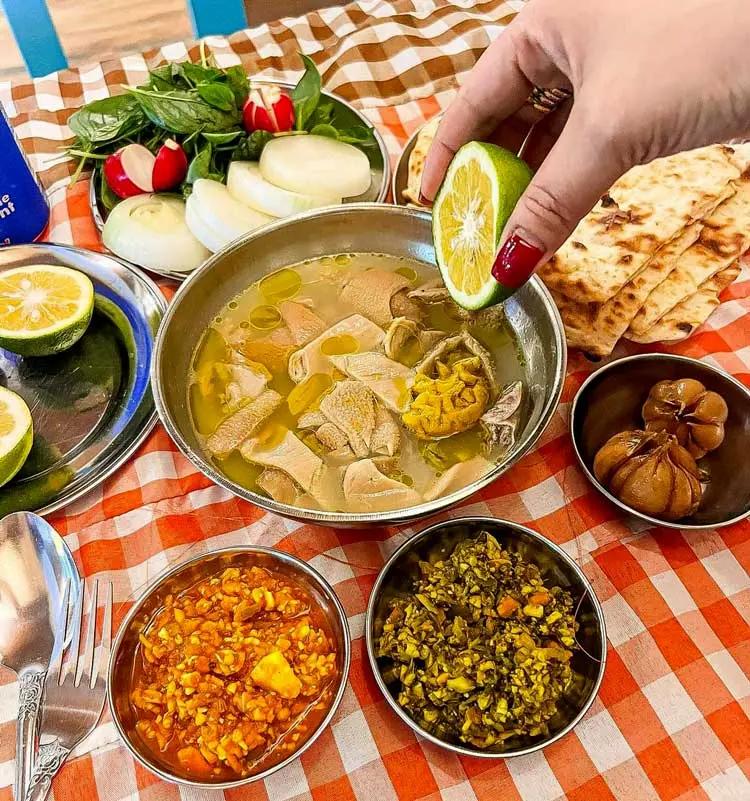
 Irrigation of Shirdon - سیراب شیردون**Sirabi Shirdoon (سیرابی شیردان)** is a traditional Iranian dish made from parts of the stomach of a **sheep or cow**. “Sirabi” usually refers to the tripe, while “Shirdoon/Shirdan” refers to another section of the animal’s stomach. It has a soft, slightly chewy texture and a distinctive smell and flavor.
It has been eaten in Iran for generations and is especially popular as a **breakfast or early-morning meal**, although people also eat it for lunch. Similar tripe dishes exist in many countries across the Middle East, Europe, and Asia, but Sirabi Shirdoon is strongly associated with traditional Iranian cuisine.
To prepare it, the stomach is cleaned very thoroughly, usually several times, to remove any odor and impurities. It is then cooked slowly for several hours with ingredients such as **onion, garlic, turmeric, salt, pepper, and sometimes cinnamon or other spices**. Long, slow cooking makes the meat tender and creates a rich broth. It is often served hot with fresh bread, lemon juice, or vinegar.
Nutritionally, Sirabi Shirdoon is a good source of **protein, vitamin B12, zinc, selenium, iron, and other minerals**. It also contains connective tissue and collagen-related proteins. Because it can also contain cholesterol and varying amounts of fat and salt depending on how it is prepared, it is best eaten in moderation, especially for people who need to limit sodium or cholesterol.
---
**سیرابی شیردان** یکی از غذاهای سنتی ایرانی است که از بخشهای مختلف **معده گوسفند یا گاو** تهیه میشود. سیرابی معمولاً به بخش اصلی شکمبه و شیردان به یکی دیگر از قسمتهای معده حیوان گفته میشود. بافت آن نرم و کمی جویدنی است و بو و طعم خاص خودش را دارد.
این غذا از قدیم در ایران خورده میشده و مخصوصاً بهعنوان **صبحانه یا غذای صبح زود** خیلی معروف است، هرچند بعضیها برای ناهار هم آن را میخورند. غذاهای مشابه سیرابی در کشورهای مختلف خاورمیانه، اروپا و آسیا هم وجود دارد، ولی سیرابی شیردان یکی از غذاهای شناختهشده سنتی ایران است.
برای درست کردن آن، ابتدا سیرابی و ش
Irrigation of Shirdon - سیراب شیردون**Sirabi Shirdoon (سیرابی شیردان)** is a traditional Iranian dish made from parts of the stomach of a **sheep or cow**. “Sirabi” usually refers to the tripe, while “Shirdoon/Shirdan” refers to another section of the animal’s stomach. It has a soft, slightly chewy texture and a distinctive smell and flavor.
It has been eaten in Iran for generations and is especially popular as a **breakfast or early-morning meal**, although people also eat it for lunch. Similar tripe dishes exist in many countries across the Middle East, Europe, and Asia, but Sirabi Shirdoon is strongly associated with traditional Iranian cuisine.
To prepare it, the stomach is cleaned very thoroughly, usually several times, to remove any odor and impurities. It is then cooked slowly for several hours with ingredients such as **onion, garlic, turmeric, salt, pepper, and sometimes cinnamon or other spices**. Long, slow cooking makes the meat tender and creates a rich broth. It is often served hot with fresh bread, lemon juice, or vinegar.
Nutritionally, Sirabi Shirdoon is a good source of **protein, vitamin B12, zinc, selenium, iron, and other minerals**. It also contains connective tissue and collagen-related proteins. Because it can also contain cholesterol and varying amounts of fat and salt depending on how it is prepared, it is best eaten in moderation, especially for people who need to limit sodium or cholesterol.
---
**سیرابی شیردان** یکی از غذاهای سنتی ایرانی است که از بخشهای مختلف **معده گوسفند یا گاو** تهیه میشود. سیرابی معمولاً به بخش اصلی شکمبه و شیردان به یکی دیگر از قسمتهای معده حیوان گفته میشود. بافت آن نرم و کمی جویدنی است و بو و طعم خاص خودش را دارد.
این غذا از قدیم در ایران خورده میشده و مخصوصاً بهعنوان **صبحانه یا غذای صبح زود** خیلی معروف است، هرچند بعضیها برای ناهار هم آن را میخورند. غذاهای مشابه سیرابی در کشورهای مختلف خاورمیانه، اروپا و آسیا هم وجود دارد، ولی سیرابی شیردان یکی از غذاهای شناختهشده سنتی ایران است.
برای درست کردن آن، ابتدا سیرابی و ش
fasti
VerifiedFood & Dining2 menu itemsMobile service
1100 Lackner Pl, Kitchener, ON N2A 0M1, Canada
Menu
Choose your meal
Irrigation of Shirdon - سیراب شیردون**Sirabi Shirdoon (سیرابی شیردان)** is a traditional Iranian dish made from parts of the stomach of a **sheep or cow**. “Sirabi” usually refers to the tripe, while “Shirdoon/Shirdan” refers to another section of the animal’s stomach. It has a soft, slightly chewy texture and a distinctive smell and flavor.
It has been eaten in Iran for generations and is especially popular as a **breakfast or early-morning meal**, although people also eat it for lunch. Similar tripe dishes exist in many countries across the Middle East, Europe, and Asia, but Sirabi Shirdoon is strongly associated with traditional Iranian cuisine.
To prepare it, the stomach is cleaned very thoroughly, usually several times, to remove any odor and impurities. It is then cooked slowly for several hours with ingredients such as **onion, garlic, turmeric, salt, pepper, and sometimes cinnamon or other spices**. Long, slow cooking makes the meat tender and creates a rich broth. It is often served hot with fresh bread, lemon juice, or vinegar.
Nutritionally, Sirabi Shirdoon is a good source of **protein, vitamin B12, zinc, selenium, iron, and other minerals**. It also contains connective tissue and collagen-related proteins. Because it can also contain cholesterol and varying amounts of fat and salt depending on how it is prepared, it is best eaten in moderation, especially for people who need to limit sodium or cholesterol.
---
**سیرابی شیردان** یکی از غذاهای سنتی ایرانی است که از بخشهای مختلف **معده گوسفند یا گاو** تهیه میشود. سیرابی معمولاً به بخش اصلی شکمبه و شیردان به یکی دیگر از قسمتهای معده حیوان گفته میشود. بافت آن نرم و کمی جویدنی است و بو و طعم خاص خودش را دارد.
این غذا از قدیم در ایران خورده میشده و مخصوصاً بهعنوان **صبحانه یا غذای صبح زود** خیلی معروف است، هرچند بعضیها برای ناهار هم آن را میخورند. غذاهای مشابه سیرابی در کشورهای مختلف خاورمیانه، اروپا و آسیا هم وجود دارد، ولی سیرابی شیردان یکی از غذاهای شناختهشده سنتی ایران است.
برای درست کردن آن، ابتدا سیرابی و ش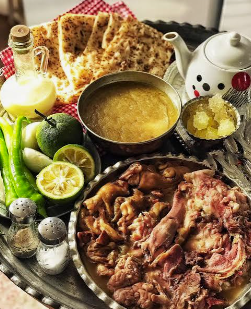 kalepache full set for 2 کله پاچهKaleh Pacheh (کلهپاچه) is a traditional Iranian dish made mainly from the head and feet of a sheep. A full serving can include different parts such as the tongue, brain, cheek/head meat, eyes, and trotters. It is traditionally eaten early in the morning, especially during colder months, and specialized restaurants that serve it are called Kaleh-Pazi or Tabbakhi. Similar dishes also exist in Turkey, the Caucasus, and parts of the Middle East.
To prepare Kaleh Pacheh, the sheep’s head and feet must first be cleaned very thoroughly. They are then slow-cooked for many hours, often overnight, with ingredients such as onion, turmeric, pepper, and sometimes garlic or other spices. The long cooking process makes the meat extremely tender and creates a rich, gelatinous broth.
It is usually served with fresh Iranian bread, and many people add lemon juice, cinnamon, or pepper. The broth can also be eaten separately with pieces of bread soaked inside it.
Nutritionally, different parts have different characteristics. The meat and tongue provide protein, vitamin B12, iron, zinc and other nutrients, while the trotters contain a lot of connective tissue and gelatin. However, some parts—particularly the brain—are very high in cholesterol, and the dish can also contain a considerable amount of fat and salt. So although it is nutritious and very filling, eating large portions frequently is generally not ideal.
کلهپاچه یکی از غذاهای بسیار قدیمی و سنتی ایران است که عمدتاً از سر و پاهای گوسفند تهیه میشود. یک دست کامل کلهپاچه میتواند شامل زبان، مغز، گوشت صورت و بناگوش، چشم و پاچهها باشد. این غذا بهطور سنتی بیشتر صبح زود و مخصوصاً در فصلهای سرد خورده میشود. مغازههایی که کلهپاچه درست میکنند هم معمولاً کلهپزی یا طباخی نامیده میشوند. غذاهای مشابه آن در ترکیه، قفقاز و بعضی کشورهای خاورمیانه هم وجود دارد.
برای درست کردن آن، ابتدا سر و پاهای گوسفند را خیلی دقیق تمیز میکنند. بعد آن را همراه با پیاز، زردچوبه، فلفل و گاهی سیر و ادویههای دیگر با حرارت کم برای چندین س
kalepache full set for 2 کله پاچهKaleh Pacheh (کلهپاچه) is a traditional Iranian dish made mainly from the head and feet of a sheep. A full serving can include different parts such as the tongue, brain, cheek/head meat, eyes, and trotters. It is traditionally eaten early in the morning, especially during colder months, and specialized restaurants that serve it are called Kaleh-Pazi or Tabbakhi. Similar dishes also exist in Turkey, the Caucasus, and parts of the Middle East.
To prepare Kaleh Pacheh, the sheep’s head and feet must first be cleaned very thoroughly. They are then slow-cooked for many hours, often overnight, with ingredients such as onion, turmeric, pepper, and sometimes garlic or other spices. The long cooking process makes the meat extremely tender and creates a rich, gelatinous broth.
It is usually served with fresh Iranian bread, and many people add lemon juice, cinnamon, or pepper. The broth can also be eaten separately with pieces of bread soaked inside it.
Nutritionally, different parts have different characteristics. The meat and tongue provide protein, vitamin B12, iron, zinc and other nutrients, while the trotters contain a lot of connective tissue and gelatin. However, some parts—particularly the brain—are very high in cholesterol, and the dish can also contain a considerable amount of fat and salt. So although it is nutritious and very filling, eating large portions frequently is generally not ideal.
کلهپاچه یکی از غذاهای بسیار قدیمی و سنتی ایران است که عمدتاً از سر و پاهای گوسفند تهیه میشود. یک دست کامل کلهپاچه میتواند شامل زبان، مغز، گوشت صورت و بناگوش، چشم و پاچهها باشد. این غذا بهطور سنتی بیشتر صبح زود و مخصوصاً در فصلهای سرد خورده میشود. مغازههایی که کلهپاچه درست میکنند هم معمولاً کلهپزی یا طباخی نامیده میشوند. غذاهای مشابه آن در ترکیه، قفقاز و بعضی کشورهای خاورمیانه هم وجود دارد.
برای درست کردن آن، ابتدا سر و پاهای گوسفند را خیلی دقیق تمیز میکنند. بعد آن را همراه با پیاز، زردچوبه، فلفل و گاهی سیر و ادویههای دیگر با حرارت کم برای چندین س